Is Indian Leather Good Quality? An Answer From Inside a Kanpur Tannery
Add Us as a preferred source on Google.
It is one of the most searched questions about Indian leather, and it is usually answered by people with no stake in the answer. We have a stake in it. Our family has been tanning hide in Kanpur since before 1996, and we still run the tannery our bags are cut from.
So here is the honest version, including the parts that are not flattering.
The short answer
Indian leather at the top end is as good as leather made anywhere. Indian leather at the bottom end is as bad as leather gets. The country produces both, in enormous volume, and almost nothing in the retail chain tells a buyer which one they are holding.
India is one of the largest leather producers in the world. That scale is exactly why the quality range is so wide: there are internationally certified tanneries running effluent treatment and export-grade finishing, and there are unregulated operations selling coated split as "pure leather" in the same market. The material is not the problem. The lack of traceability is.
What Kanpur actually is
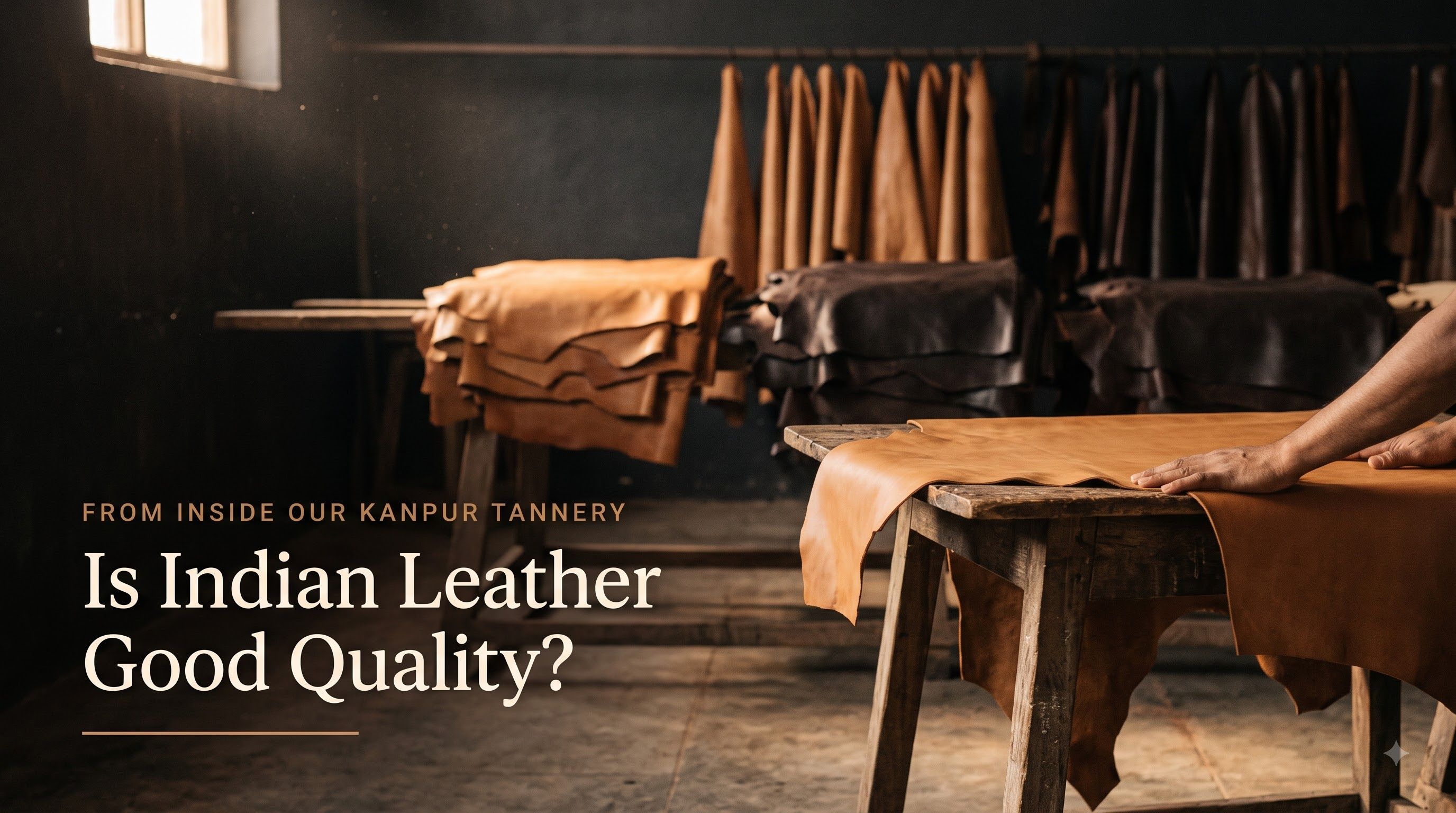
Kanpur has been the centre of Indian leather tanning for well over a century, built along the Ganga because tanning needs water. At its peak the city held hundreds of tanneries, and it remains the reference point for Indian leather the way Tuscany is for Italian.
Its reputation carries both meanings. Kanpur is where the country's most experienced tanners work — multi-generation operations with genuine craft knowledge. It is also where the industry's environmental record was worst, and where periodic government closures of non-compliant units have made national news.
Both things are true at once, and a buyer cannot tell from a product which kind of tannery it came from. That is the real problem with Indian leather — not quality, but the fact that quality is invisible at the point of sale.
The environmental question, answered directly
Tanning is chemically intensive. Chrome tanning, which is how the overwhelming majority of the world's leather is made, uses chromium salts and produces effluent that is genuinely damaging if it is discharged untreated. For decades in Kanpur, a great deal of it was.
The response was Zero Liquid Discharge. A ZLD facility treats and recycles its process water so that effectively no liquid effluent leaves the site — the water is recovered and reused, and the residual solids are handled separately. It is expensive to install and expensive to run, which is precisely why it separates operations that are serious from operations that are not.
Our facility moved to ZLD standards in 1996. We expanded it in 2007, and opened a second tannery in Kolkata in 2018. That is not a marketing position taken up recently; it is a thirty-year-old capital decision that predates the brand you are reading about by decades.
Why most Indian bag brands cannot answer this question
Here is the part of the industry that is not widely understood. Most Indian leather bag brands do not make leather. They buy finished hide from traders, send it to a job-work unit to be cut and stitched, and put a label on the result.
There is nothing dishonest about that model — it is how most fashion manufacturing works globally. But it has a consequence: the brand cannot tell you which tannery the hide came from, or how it was tanned, because the brand does not know. The trader knows. The brand knows the price per square foot.
That is why so much Indian leather retail defaults to the word "genuine." It is the only claim a brand can make when it has not seen the hide before it arrived cut.
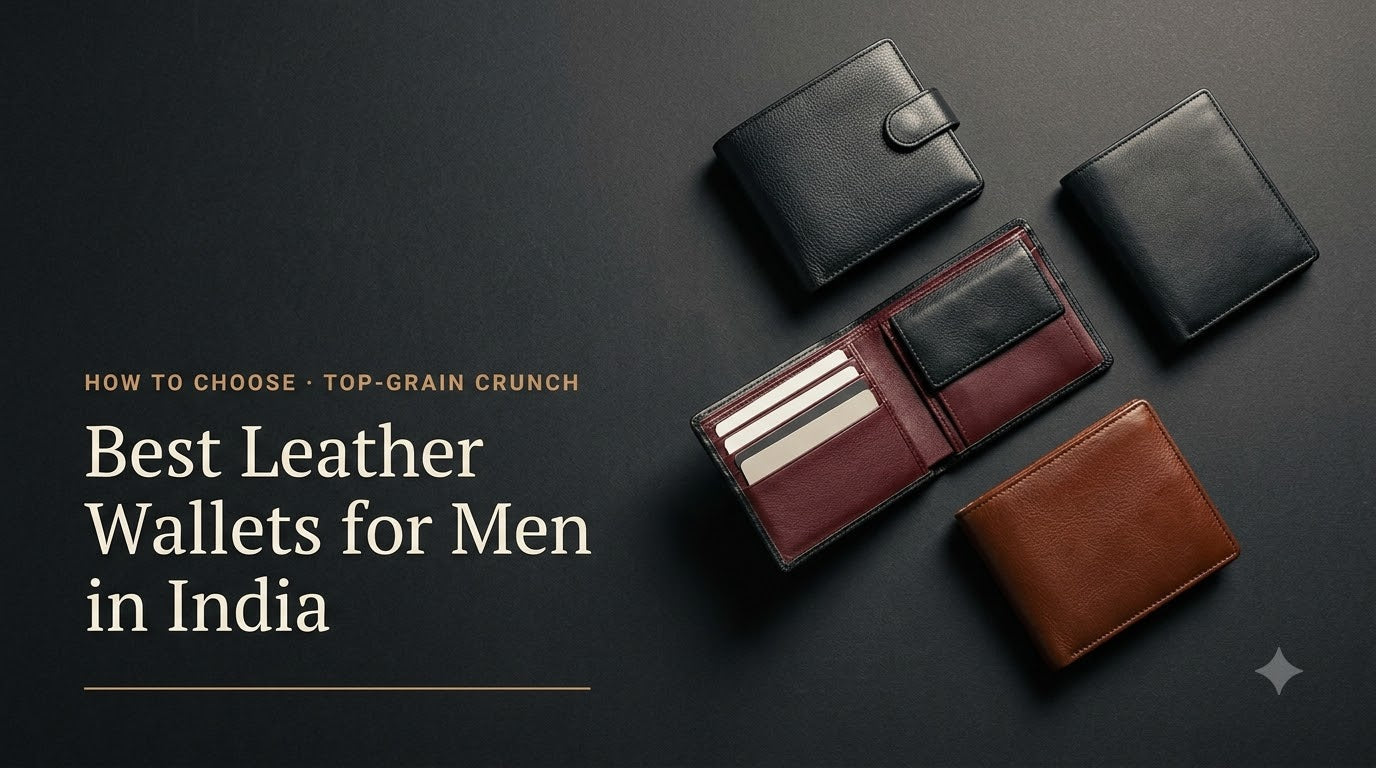
We are on the other side of that line. The tannery is ours. When we say the Roman Backpack is full-grain aniline treated with natural oils and waxes, or that the Rowe Wallet is top-grain crunch, that is a description of material we processed, not a claim relayed from a supplier.
How to judge Indian leather as a buyer
You cannot inspect a tannery before buying a wallet. You can apply four questions that separate the two halves of the industry:
- Will they name the grade? Full-grain, top-grain, NDM, split. A brand that only says "genuine leather" or "pure leather" is either selling low-grade split or does not know. Both are reasons to walk.
- Will they name the source? Own tannery, named supplier, or silence. Silence is the common answer.
- What is the warranty, in writing? Not "we stand behind our products" — an actual document with a term, a claim process and a turnaround time. Confidence in material shows up as willingness to repair it.
- Does the product copy contradict itself? A surprising number of Indian listings say "full-grain" in one line and "100% genuine leather" in the next. Those are different grades. Whoever wrote it was not reading.
We will note, because it would be dishonest not to, that some of our own older product descriptions still carry the phrase "100% genuine leather" from an earlier copywriting pass. It is wrong, we know it is wrong, and we are replacing it across the catalogue. The material in those bags is NDM leather, and the description should say so.
Is Indian leather banned or illegal?
No. Leather production and sale are legal in India, and the country is a major exporter. What exists is regulation: state-level rules on cattle slaughter vary considerably, environmental compliance requirements apply to tanneries, and non-compliant units have been shut down in enforcement drives — most visibly in Kanpur. Those closures target effluent violations, not the leather trade itself.
For a buyer, the practical implication is not legality. It is that compliance costs money, so a supplier competing purely on price is likely to be cutting it somewhere.
So — is it good?
Indian leather from a compliant, experienced tannery is excellent material at a price that is not available anywhere else in the world, because the craft base and the raw supply are both here. Indian leather bought blind, on price, from a chain that will not name its source, is a coin toss.
The variable is not the country. It is whether anyone in the chain will tell you what you are holding.
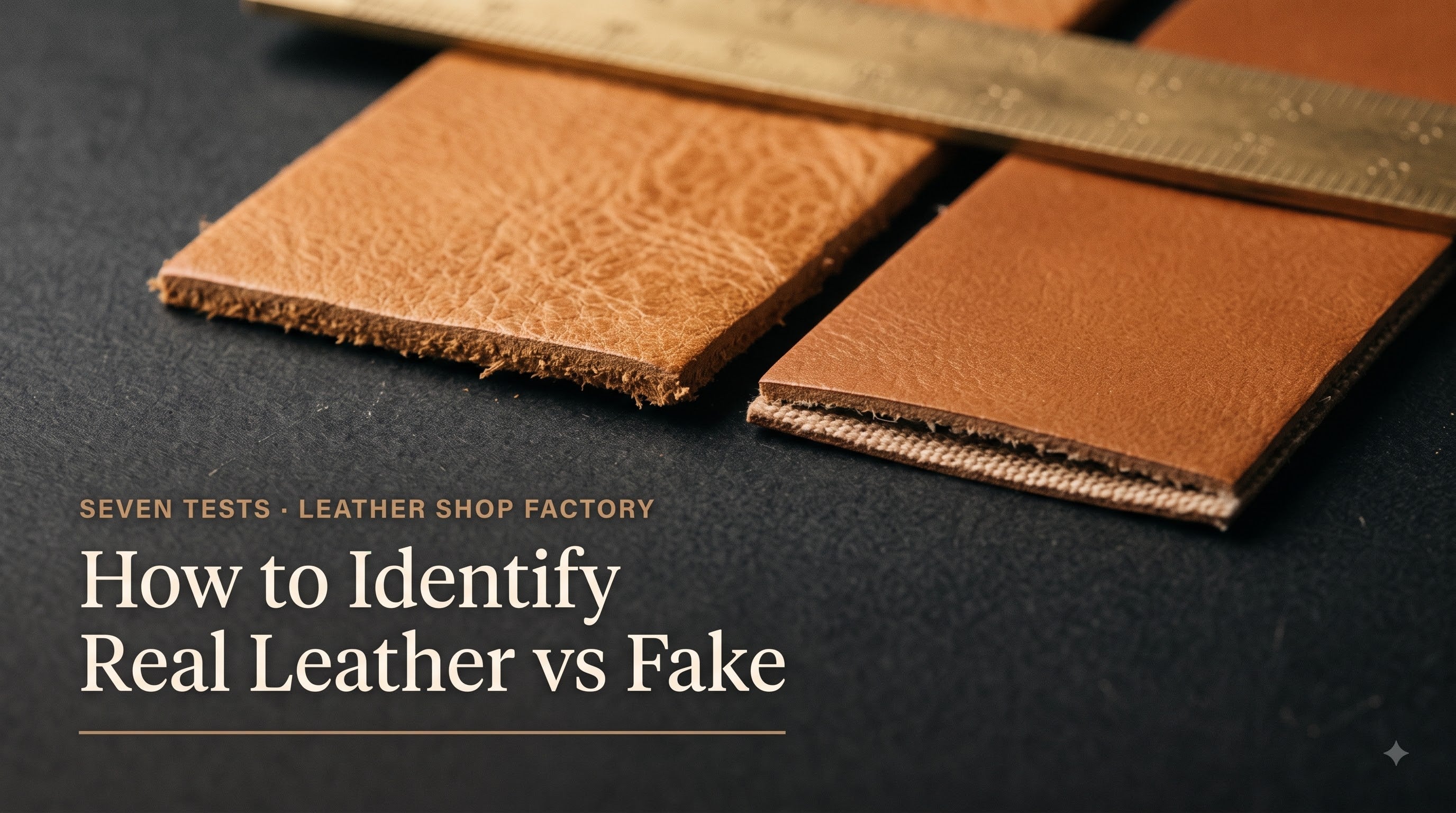
If you want the practical version of that test, we wrote up the physical checks in how to identify real leather vs fake, and the grade distinctions in full-grain vs top-grain. Our own warranty terms are on the Lifetime Service Warranty page, and the founders are on About Us.
Frequently asked questions
Is Indian leather good quality?
Indian leather from a compliant tannery is comparable to leather produced anywhere in the world, and India is one of the world's largest producers. The quality range is very wide, however, and retail rarely discloses the grade or the source — so quality depends far more on the specific supply chain than on the country.
What is Kanpur leather?
Kanpur in Uttar Pradesh has been India's principal leather tanning centre for over a century, located on the Ganga because tanning is water-intensive. It holds the country's deepest concentration of tanning expertise and, historically, its worst effluent problems — which is why Zero Liquid Discharge compliance is the meaningful distinction between operations there.
What does Zero Liquid Discharge mean in leather tanning?
A ZLD tannery treats and recycles its process water so that essentially no liquid effluent leaves the site. The water is recovered for reuse and residual solids are handled separately. It is costly to install and operate, which makes it a reliable marker of a serious operation.
Is leather banned in India?
No. Leather production and sale are legal, and India is a significant exporter. State-level cattle slaughter rules vary, and environmental regulations have led to the closure of non-compliant tanneries — but those actions target effluent violations rather than the leather trade.
Do Indian leather brands make their own leather?
Most do not. The common model is to buy finished hide from traders and outsource cutting and stitching, which means the brand cannot identify the tannery or tanning method. A minority own their tanning operation and can state grade and origin directly.