Full-Grain vs Top-Grain Leather: What's the Difference?
Add Us as a preferred source on Google.
Shopping for a leather bag or wallet, you run into the same two terms again and again: full-grain and top-grain. They sound similar, and plenty of listings use them loosely, but they describe genuinely different materials that wear, age and cost differently. Knowing which is which makes it far easier to judge whether a bag is worth its price. Here is a plain-English breakdown.
What full-grain leather is
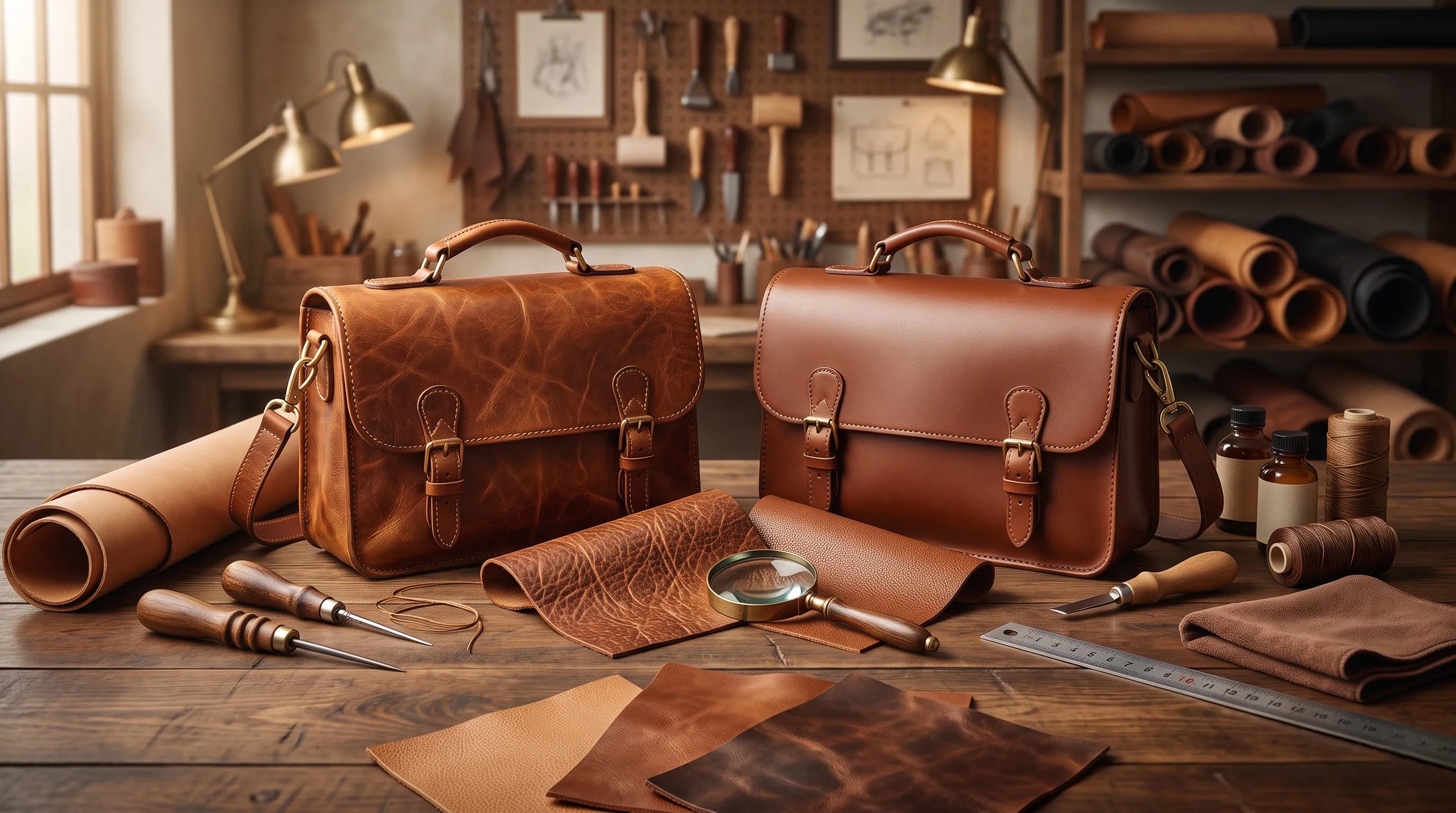
Full-grain is the top layer of the hide with its natural surface left intact - nothing sanded away. Because that outer layer holds the tightest, strongest fibres, full-grain is the most durable leather you can buy and the hardest to scratch through. It also keeps the hide's natural character: small marks, grain variation and, over months of use, a deepening patina that no two pieces share. Our full-grain waxpull backpacks, the Vesper and Roman, are good examples - the leather is treated with natural oils and waxes and built to age rather than wear out.
What top-grain leather is
Top-grain starts from that same outer layer, but the very surface is lightly sanded and finished to even out marks. That gives it a smoother, more uniform look and usually a light protective coating that shrugs off stains better than raw full-grain. The trade-off: sanding removes some of the strongest fibres, so top-grain is a little less hardy over the long run and develops a softer, slower patina. It is also generally more affordable, which is why it is such a common choice for wallets and everyday bags. Most of our leather wallets, like the Drey Wallet, use a top-grain crunch leather.
The key differences at a glance
- Durability: full-grain is tougher and lasts longest; top-grain is still hard-wearing but softer over the years.
- Look: full-grain shows natural grain and character; top-grain is smoother and more uniform.
- Ageing: full-grain builds a rich patina; top-grain ages gently without changing much.
- Stain resistance: top-grain's finish handles spills a little better.
- Price: full-grain costs more to make, so it costs more to buy.
A quick word on "genuine leather"
You will also see the label "genuine leather", and here the wording gets confusing. In everyday use - and on many product pages - "genuine leather" simply means the item is made of real leather rather than synthetic PU. In the strict grading sense, though, "Genuine Leather" is also a specific lower tier cut from the underneath layers of the hide. The takeaway: don't judge a bag by that phrase alone. Look for the actual grade or the leather's name, and check how it feels and smells. Real, full-substance leather - full-grain, top-grain, or a solid everyday leather like the NDM we use on our laptop bags and slings - will always outlast bonded or heavily coated substitutes.
Which should you choose?
Neither is simply "better" - it depends on what you want:
- Choose full-grain if you want maximum durability and a piece that visibly ages with you. It suits bags you will carry for years, like a leather backpack or a briefcase.
- Choose top-grain if you prefer a sleek, even finish, a little more stain resistance and a friendlier price - a natural fit for wallets and everyday carry.
- For daily workhorses like laptop bags and crossbody slings, a well-made full-substance leather such as NDM gives you durability and value without the full-grain premium.
How to tell them apart
- Look at the surface: natural pores, small scars and slight irregularity point to full-grain; a very even, almost printed-looking texture suggests top-grain or corrected grain.
- Feel it: full-grain feels organic and warms to the touch; a heavy coating can feel faintly plasticky.
- Smell it: real leather has a distinct, rich scent that synthetics fake poorly.
- Mind the price: a bag sold as full-grain at a suspiciously low price usually is not.
Caring for each
Both last far longer with a little upkeep. Full-grain's open surface benefits from slightly more regular conditioning, while top-grain's finish forgives the odd spill. Our leather care guide covers cleaning, conditioning and storage for both.
Which is right for you
So, full-grain or top-grain? If longevity and character top your list, full-grain earns its premium. If you want a clean look at a keener price, top-grain is a smart buy. Either way, choosing real, full-substance leather over synthetic is the decision that matters most. Browse our handcrafted leather bags, wallets and accessories to compare both in person - each backed by a lifetime service warranty.
Frequently asked questions
Is full-grain leather worth the extra cost?
If you want maximum durability and a bag that develops real character over a decade or more, yes. Full-grain is the strongest leather and ages the best, which is why it commands a higher price.
Does top-grain leather last?
Yes. Top-grain is durable and hard-wearing; it simply ages more gently than full-grain and is a little softer over the very long run. For most wallets and everyday bags it is an excellent, practical choice.
Which leather is better for a wallet?
Top-grain is a common and sensible pick for wallets thanks to its smooth finish and stain resistance. Choose full-grain if you specifically want your wallet to patina and toughen with age.
Is "genuine leather" real leather?
It is real leather, but the phrase can also refer to a lower grade cut from the underlayers of the hide. Don't rely on the label alone - check the actual grade and how the leather looks and feels.